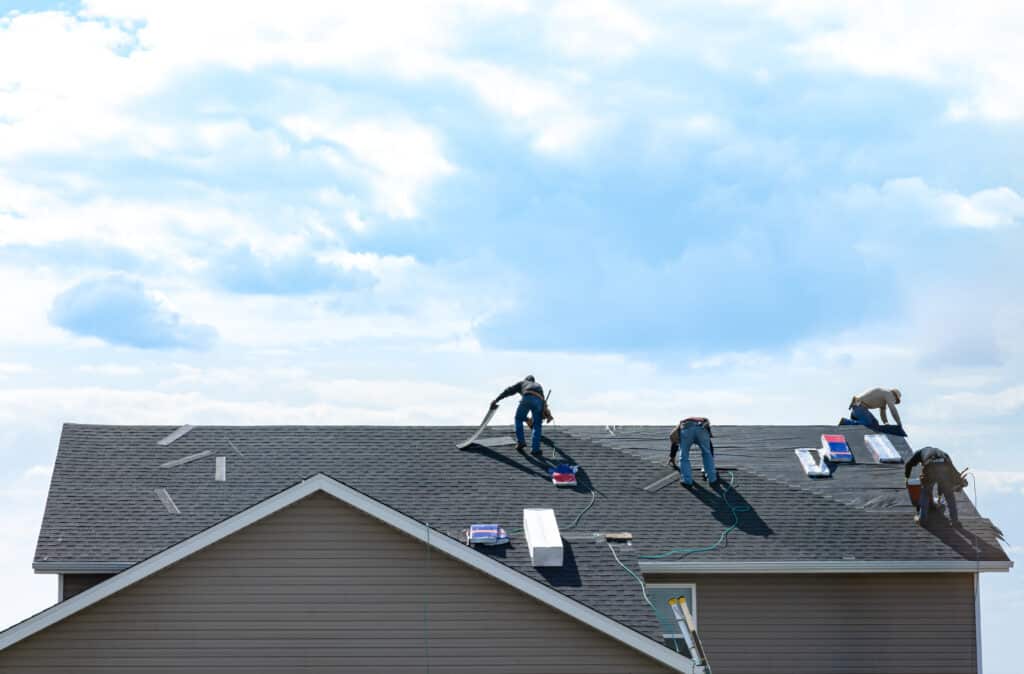
Winter is normally the roofing slow season. However, the timing and severity depend heavily on the local climate, weather patterns, and socio-economic factors. It also depends on the individual roofer and the type of work they do.
Top reasons for slow seasons in roofing
Let’s take a closer look at the culprits behind roofing off-season:
Bad weather
Most roofing work is done outdoors, often at a high elevation. That in itself is quite dangerous. And prohibitively so in poor weather conditions.
Snowfall, heavy rains, and strong winds make roofing unsafe or impossible. When such weather persists for weeks, roofers have no choice but to down their tools.
Shifts in consumer spending habits
Consumer spending behavior is highly dynamic. For example, homeowner confidence to spend on home improvement has dropped significantly over the last two years. That could mean indefinite slow roofing seasons in some of the more extreme cases.
Unstable real-estate markets
The US housing market is inherently unstable. It is easily influenced by social, political, and economic dynamics such as mortgage rates, government policies, demographics, employment rate, and inflation.
From time to time, the housing market crashes under the mounting pressure. Property prices plummet, new construction halts, and ongoing projects stall. For instance, during the Great Recession (2007-2012), house prices dropped by over 50% in some US markets.
Fewer or milder storms
Roofers do a lot of restoration jobs following storm damage. In a recent survey, 65% of homeowners in storm-prone areas reported that severe weather (thunderstorms, hail, hurricanes, etc.) had damaged their roof.
When these storms take a break or become less destructive, roofers in some regions are left with no work.
This all sounds very sadistic. But roofers do not stare at the sky wishing for storms so they can make money. They, instead, provide much-needed rebuilding services when disaster strikes.
Why roofing slows down in winter
Roofing work significantly slows down during the winter season spanning December through February. This year, winter was especially slow, as indicated by the record-low hiring figures in construction.
So, why does roofing grind to a halt during the winter?
While no one likes to go out in the freezing cold, winters are especially prohibitive for roofers. Here’s why:
- The snow, ice, and poor visibility make roof work dangerous
- Families prioritize holiday shopping and travel spending over home improvements
- The weather disrupts material supply chains and availability
- Handling certain roofing materials such as asphalt shingles, sealants, and adhesives can be difficult in cold conditions
- The real estate economy slows down—hardly anyone sells, buys, or builds a house in winter
- Winter keeps away destructive weather events such as hurricanes, windstorms, and tornadoes
RELATED ARTICLE — Eliminate Errors with Roofing Estimating Software
Slow season by region
Seasonality in roofing is not the same everywhere. Roofers in different regions face slow seasons at different times of the year and for different reasons. The severity of low roofing seasons varies by region too.
Below is a table summarizing roofing season by region in the US.
| Region | Slow season | Reasons | Severity |
| Northwest (OR, WA, ID) | November–February | Persistent rains and temperatures reaching the low 40s | Moderate |
| Midwest (MI, OH, MN, IL) | December–March | Harsh winter conditions characterized by blizzards, ice storms, and heavy snowfalls | Extreme |
| Northeast (PA, NY, MA) | December–February | Icy conditions with bitter sub-zero winds | Extreme |
| Southeast (TN, GA, NC, SC) | December–February | Mild winter with occasional rain and snow | Low |
| Gulf Coast (South FL, AL, TX, MS) | No low season | Conditions remain mostly conducive for roofing | Very low |
| Mountain States (MT, AZ, CO, NV, UT, NM, WY, ID) | November–March | Harsh winter weather with heavy precipitation, mountain snow, and sub-zero temperatures | Extreme |
For roofing contractors: how to make the most of the slow season
For many roofers, the low season can seem like a frustrating money pit. But it doesn’t have to be a total waste of time.
Let’s discuss some of the worthwhile things you can do with all that free time.
Offer seasonal discounts
Offer your customers seasonal discounts to drum up business. Many contractors do this, and it actually works.
Some customers, especially commercial clients, know that the low season is the cheapest time to replace a roof or do some major remodel. Those are your prime targets. Also, try to entice homeowners into getting their roofs done with limited-time offers.
Here are some ideas for the offers and discounts you can offer:
- Free roof inspections (that turn into paid repairs)
- Attractive referral rewards
- Flexible financing such as buy-now-pay-later or payment installments
- Early-bird spring discounts
- Repair credit toward replacement
- Bundled interior services
- Discounted warranty upgrades
Take on winter jobs
During winter when big-ticket roofing demand is low, you can double down on winter-related jobs. Such jobs may include:
- Gutter cleaning
- Roof inspection and leak detection
- Roof tarping and sealing
- De-icing
- Roof snow removal
- Emergency storm damage repair
- Commercial roof maintenance
These services may not pay as much as larger jobs, but at least they’ll keep the lights on. Plus, they may be in demand throughout the winter period.
Do some housekeeping
Even while picking up small jobs here and there, you’ll still have a lot of time on your hands. Use that time to get to the mundane tasks you’ve been shelving for weeks or months. These are the boring or non-essential tasks that you were too busy to attend to before, such as:
- Servicing your roofing tools and equipment
- Organizing your business systems (records, apps, calendar, books, etc.)
- Reconnecting with old clients
- Working out deals with suppliers
- Researching cutting-edge roofing designs, technologies, and methods
- Restructuring internal workflows
Train your employees
The slow season is a good time to run a roofing training program. Arrange training sessions to upskill your existing crew members or get new employees up to speed.
The quiet time means you won’t be interrupted by work calls. And, depending on your HR arrangement, those employees in training might not be on the clock. So, training sessions won’t eat into work hours.
And speaking of savings, the attendance doesn’t have to be in-person. The training can happen online with everyone sitting comfortably in their cozy home.
Stay visible
Don’t go dark or quiet as the low season sets in. If anything, make your brand even louder and more visible by ramping up your marketing campaigns.
You’re probably thinking, “That doesn’t make sense. Why market when there’s no one to buy?”
And you’re partly right; barely anyone is buying roofing services in the low season. But that’s not the point. The idea is to stay visible when other roofers have gone quiet. And more importantly, lock in clients early on before the high season starts.
Here are some of the marketing strategies for doing just that:
- Local SEO marketing to maximize web visibility
- Retargeting campaigns to re-engage cold leads and past clients
- Promos around long-term roofing contracts
- Referral program to encourage word-of-mouth marketing
- Pre-booking campaigns
RELATED ARTICLE — Unique Marketing Strategy for Roofing Companies
For homeowners: Is the off-season a good time to replace your roof?
Many homeowners assume that peak roofing season is the best time of year to replace a roof. But actually, doing major roof work during the low season might be the smarter choice. When there’s low roofing demand, you’re more likely to get a good deal and other benefits.
Here are five reasons why the low season is the cheapest time to replace a roof.
Unbeatable discounts
Many roofers offer generous discounts during the low season. That’s in a bid to attract otherwise reluctant customers or get ahead of competitors. You might even get free services like pre-installation inspections.
Why not take advantage of these discounts?
Let’s say replacing the roof of your single-family home costs $10,000. A roofer then offers to do the job in December for 20% off. That saves you $2,000 right there.
High contractor availability
During the warmer spring and summer months, it can be difficult to get hold of a good roofing contractor. They are all so busy.
Replacing an entire roof is a pretty complex and lengthy job. So, you may have to wait weeks for your turn on a roofer’s calendar.
In the low season, though, things are different. You’ll likely be spoilt for choice since every roofer’s schedule is wide open. You might book a roof replacement and get it started the same day—no waiting.
Faster job completion
The roofer can direct all their time, attention, and resources to your project. That’s because they may not have another ongoing job elsewhere. Plus, the roofer might be determined to complete the job within a narrow window of favorable weather.
That obviously results in a faster turnaround.
Lock in exclusive services
Many roofers reward low-season clients. Some of those rewards are in the form of exclusive services such as:
- Lock-in pricing for future projects
- Extended workmanship warranties
- Free upgrades on roofing materials
- Long-term preventive maintenance deals
- Discounted contracts for ongoing work (roof cleaning, gutter cleaning, moss and algae treatment, etc.)
- Periodic storm prep and damage checkups
Additional perks
You get to enjoy the following perks by ordering an off-season roof replacement:
- More personalized service
- Financing specials
- Better communication with roofers and suppliers
- Faster services
- Flexible appointments and schedules
- Priority attention
RELATED ARTICLE — How Long Do Tile Roofs Last?
Slow season for roofing FAQs
When is roofing slow season?
For most roofers, the winter months between November and March have the slowest demand for roofing services. The actual period and severity of the off-season vary depending on the region.
What causes slow roofing seasons?
The main reasons for low roofing demand include:
- Bad weather
- Shifts in consumer spending priorities
- Social, political, and economic factors
- Unstable real estate markets
- Calmer storm seasons
Why does roofing slow down in winter?
The cold temperatures, strong winds, rain, and snowfall make roof work dangerous or even impossible. Also, certain roofing materials such as brittle shingles, adhesives, and sealants do not work well in freezing conditions.
What can roofers do during off-season?
During the off-season, roofers can offer service discounts and take on winter jobs. They can also conduct employee training, focus on marketing, and organize their business systems.
How can homeowners take advantage of slow roofing season?
Homeowners can take advantage of roofing discounts to save money on big roofing jobs. They also enjoy exclusive limited-time perks from roofing contractors.
Conclusion
As a roofer, there’s really nothing you can do to stop the low season. You can, however, prepare for it.
Plan your calendar such that you have something to do in the off-season. It could be maintenance operations, marketing, training, or winter jobs. Also, make sure you emerge from the low season ready for work.
With good preparation, you won’t see the low season as an idle nuisance. Instead, it will be a time to improve your business, grow your clientele, and learn something new.
As a homeowner, the low season is a good time to claim roofing discounts and customer rewards. And don’t feel bad about it—you won’t be taking advantage of the roofers. You’ll actually be helping them make better use of the abundant time. It’s a win-win.