RoofSnap vs. EagleView: Full Comparison
If you’re comparing RoofSnap and EagleView, EagleView is the recognized standard for measurement accuracy and insurance-carrier acceptance.
RoofSnap is the better choice for contractors who need more than a measurement report — where the estimate, contract, and payment happen too.
Key RoofSnap highlights include:
- Published, per-report pricing starting at $13, no sales call required
- DIY measurement tools for roofs where satellite imagery falls short
- Measurement, estimating, contracts, and payments in one connected app
Start Free Trial
RoofSnap vs. EagleView: Comparison Table
The comparison below summarizes the biggest differences between RoofSnap and EagleView, including pricing, measurement methods, workflow, and who each platform is best for.
Category

Best For
Precise, transparent-cost measurements plus a full sales workflow
Insurance restoration and high-volume contractors who need industry-standard, carrier-accepted accuracy
Core Workflow
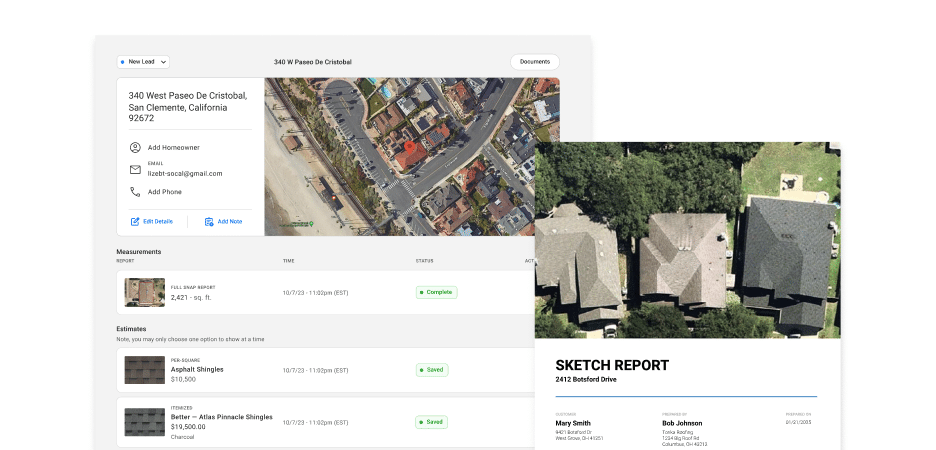
Measure → Estimate → Propose → Contract → Get Paid
Measure → integrate report into a CRM → estimate and propose separately
Measurement Approach
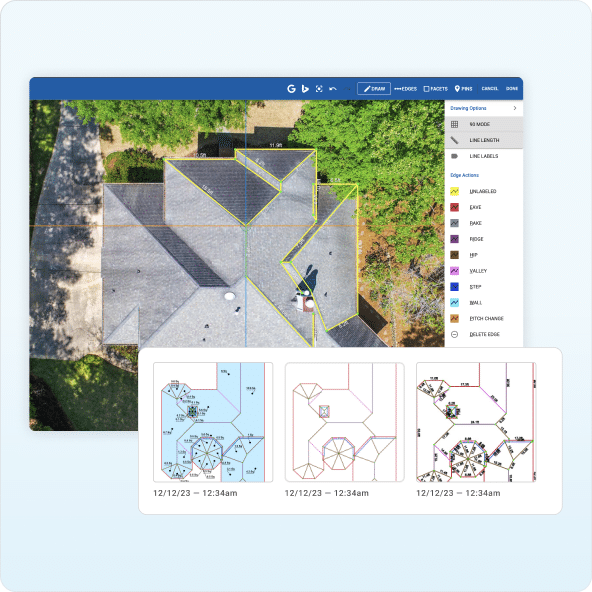
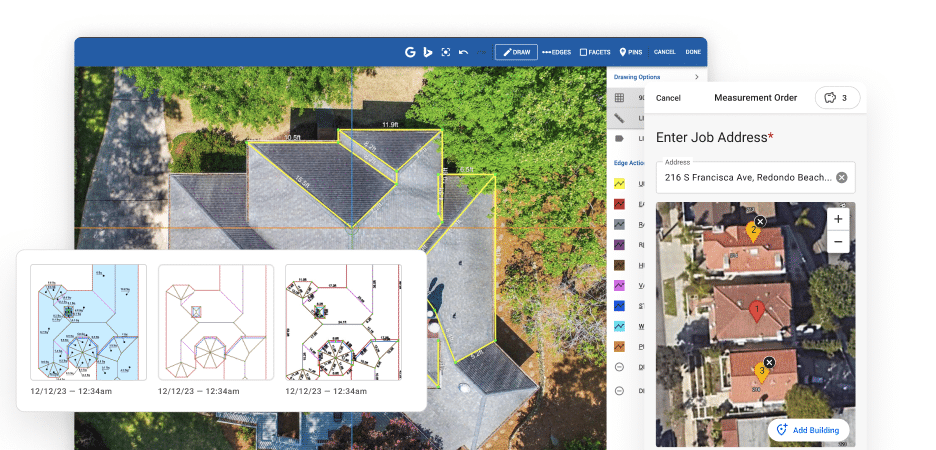
Order reports or draw-it-yourself from aerial imagery, photos, or drone footage
Order automated aerial/satellite reports; no DIY option
Measurement Control
Review, adjust, and refine before estimating
Fast automated outputs; less hands-on control
Report Turnaround
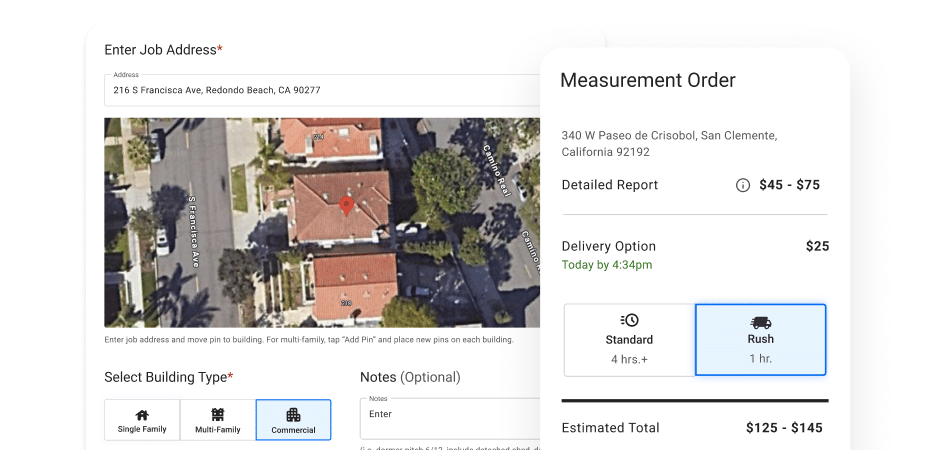
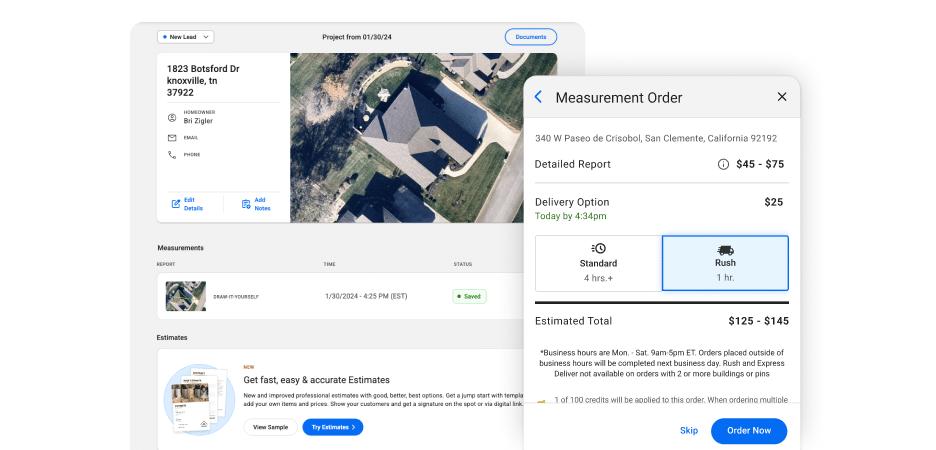
Standard: 4 hours.
Rush: under 30 minutes.
DIY: instant.
Same-day to next-day standard; varies by plan and demand
Pricing Model
Pay-As-You-Go: $13/report.
Monthly: $105/user/mo.
Annual: from $52/user/mo.
$15–$38/report standard, up to $87 premium (user-reported). Subscription: quote-based only.
Pricing Transparency
Fully published online
Not published; pricing page is a contact form
DIY Measurement Tools
Yes: unlimited, included in subscriptions
Not available
Gutter Measurements
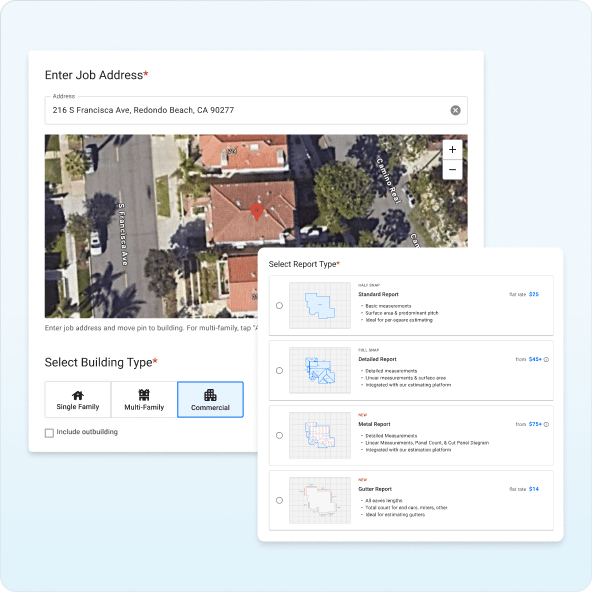
Yes: dedicated gutter reports
Not offered
Estimating
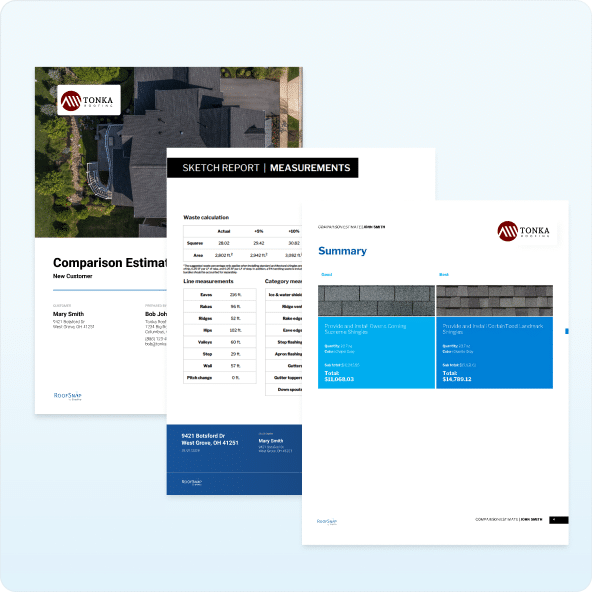
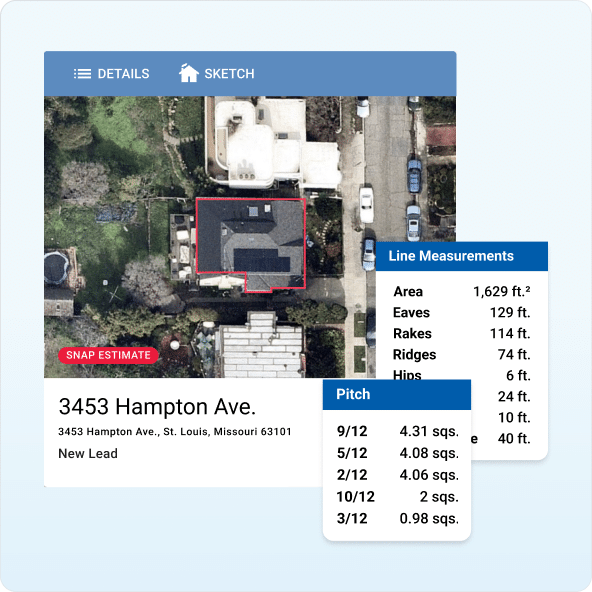
Snap Estimates: generate Good-Better-Best bids in seconds directly from any measurement
Not native; requires CRM integration
Proposals & Contracts
Branded proposals, e-signable contracts, sent natively
Not included natively
Insurance Acceptance
Professional reports with editable documentation
Industry-recognized carrier acceptance
Payments
Native in-app payments
Not included
Homeowner Financing
Yes: Acorn Finance, $0 dealer fees, 30+ lenders, up to $100K
Not offered
Free Trial
7 days, no credit card required
Available; no credit card required; no permanently free version
Customer Ratings
4.7/5 on Capterra (11 reviews)
4.3/5 on Capterra (44 reviews); 3.7/5 for Value for Money
Best Value For
Small to midsize roofing contractors
Enterprise and restoration teams
Quick answer: RoofSnap is the better choice for transparent pricing, DIY measurement flexibility, and a complete sales workflow. EagleView is typically used for raw measurement accuracy and insurance-carrier acceptance.
Why Choose RoofSnap Over EagleView?
EagleView is a capable measurement provider, especially where carrier-accepted accuracy is the top priority.
But when price per report, pricing transparency, and a full sales workflow matter as much as measurement precision, RoofSnap keeps the entire sales process — from first measurement to final payment — in one connected workflow.
Transparent, Per-Report Pricing
For contractors ordering more than a few reports a month, RoofSnap’s $13 Pay-As-You-Go rate or subscription pricing is significantly cheaper than EagleView’s user-reported $15–$38 per report.
RoofSnap publishes every price upfront.
- Pay-As-You-Go reports start at $13, no subscription required
- Subscriptions include unlimited DIY measurements at no added per-order cost
- All pricing published online at roofsnap.com/pricing — no sales call required
A Complete Measurement-to-Payment Workflow
EagleView delivers the report and stops there. Everything that follows, including the estimate, proposal, contract, and payment, happens in a separate tool.
RoofSnap keeps your measurement, estimate, proposal, contract, and payment in one connected workflow.
- Snap Estimates: satellite measurement and AI autofill get a fast initial estimate to homeowners via a shareable link
- Branded proposals and e-signable contracts sent natively from the app
- In-app payments: deposits and full payments collected on mobile
Measure Any Roof, Not Just the Ones Satellites Can See
EagleView depends on existing aerial imagery, which can leave gaps on new construction or tree-covered properties.
RoofSnap’s DIY tools close that gap with photos or drone footage.
- DIY measurement tools: sketch any roof from aerial imagery, photos, or drone footage
- Unlimited DIY measurements included in subscription plans
- Dedicated gutter measurement reports — not offered by EagleView
Built for the Field, Not the Enterprise
EagleView is built for contractors who prioritize enterprise-grade measurement data.
RoofSnap is built for the everyday realities of running a roofing business, helping you measure, estimate, close jobs, and get paid without adding unnecessary complexity.
- Self-serve setup with no sales call or lengthy onboarding
- Complete mobile workflow from measurement to payment
- 40% of surveyed RoofSnap customers cited ease of use as the primary reason they chose the platform
Documentation You Control
EagleView’s automated reports are the industry standard for accuracy. RoofSnap’s reports are dynamically editable, giving contractors more say over what reaches the homeowner or adjuster.
Some contractors use both — EagleView for carrier-accepted adjuster reports, RoofSnap for the estimate, proposal, contract, and payment workflow.
- Adjust facets, pitches, and notes after delivery
- Add inspection photos and documentation before sharing
- Branded, professional presentation for homeowners and adjusters
How RoofSnap and EagleView Compare Across the Roofing Workflow
- Estimating and Proposals
Turn a measurement into a bid without switching platforms.
- RoofSnap uses satellite imagery to auto-fill roof area and pitch, then generates up to five pricing options in under 10 seconds — share directly with the homeowner.
- EagleView delivers the measurement report only, while estimating happens in a connected CRM.
- Measurement Method
Both platforms start with aerial imagery, but the paths diverge from there.
- RoofSnap lets contractors order a report or draw their own from aerial imagery, photos, or drone footage.
- EagleView orders aerial/satellite reports built from its own imagery library, with no DIY option.
- Coverage and Imagery Dependency
Not every property has usable satellite imagery.
- RoofSnap’s DIY tools cover newer construction and tree-obstructed properties that satellite imagery can’t reach.
- EagleView depends on existing aerial coverage; some reviewers report switching tools for roughly half their reports in affected markets.
- Gutter Measurements
Measure the full scope of the job, not just the roof.
- RoofSnap offers dedicated gutter measurement reports.
- EagleView does not offer a dedicated gutter measurement product.
- Integrations and CRM
Both platforms connect to the rest of your tech stack.
- RoofSnap focuses on the sales process: measurements, estimates, contracts, payments, and material ordering.
- EagleView integrates with CRMs like AccuLynx, JobNimbus, Beacon, and Exterio, so ordering a report from inside those platforms is possible for teams already using them.
- Mobile Accessibility
Take the workflow from the office to the field.
- RoofSnap’s mobile app supports measuring, estimating, contracting, and payment from a phone.
- EagleView’s iOS/Android app supports remote report ordering.
- Turnaround Time
Get a usable number quickly or skip the wait entirely.
- RoofSnap delivers standard reports in about 4 hours, rush requests in 30 minutes or less, and DIY measurements instantly.
- EagleView’s standard residential reports typically arrive the same day or next day, depending on plan and demand.
- Pricing Transparency
Know the cost before you order.
- RoofSnap publishes all pricing online.
- EagleView’s pricing page is a contact form; per-report costs are known only from user reviews.
The Real Difference Between RoofSnap and EagleView
RoofSnap wins on price, workflow control, and speed-to-estimate. EagleView wins on raw measurement accuracy and insurance-carrier acceptance.
The contractor who needs to measure, estimate, contract, and get paid in one tool — without enterprise pricing — chooses RoofSnap.
Measurement Control vs. Per-Report Cost
EagleView’s 98.77% accuracy claim is widely cited and consistently repeated across independent industry sources.
RoofSnap’s professional reports start at $13, with editable, photo-documented measurements that give contractors more control over the number for a fraction of the cost.
Automated Output vs. Hands-On Control
EagleView hands you a finished report generated from satellite and aerial imagery.
RoofSnap lets contractors adjust facets, pitches, and notes after delivery, or build the measurement themselves from photos or drone footage.
Measurement-Only vs. Full Workflow
EagleView is a measurement data company: the report is the product, and everything after it happens somewhere else.
RoofSnap connects the measurement to the estimate, proposal, contract, and payment, all in one app.
Published Pricing vs. Sales-Call Pricing
EagleView’s per-report and subscription costs come from a sales conversation; nothing is published on its site.
RoofSnap publishes every price online, starting at $13 per report with no call required.
The right choice depends on what your business values most: measurement accuracy alone, or a complete workflow from measurement to payment.
See RoofSnap in Action
A measurement report is only useful once it turns into a closed job.
RoofSnap keeps that path short: order a report or sketch one yourself, then estimate, propose, and get paid, all in one app.
43% of surveyed RoofSnap customers say proposal tools are the most impactful part of closing a sale.
Start your free trial today and see why—no credit card required.
RoofSnap vs. EagleView: Frequently Asked Questions
RoofSnap and EagleView are both roofing measurement tools, but they’re built around different priorities.
EagleView is a measurement data company known for industry-standard accuracy and insurance-carrier acceptance. RoofSnap combines professional measurements with estimating, proposals, contracts, and payments in one platform.
With RoofSnap, contractors can order professional reports or create DIY measurements, generate estimates, send branded proposals, collect e-signatures, and accept payments, all without switching tools.
EagleView has the edge in raw measurement accuracy and insurance-carrier acceptance. Its 98.77% accuracy claim is well documented and widely recognized for insurance and restoration work.
RoofSnap’s professional reports are editable, allowing contractors to adjust facets, pitches, notes, and photos before sharing them.
For standard residential projects, both tools perform well. Contractors who prioritize workflow, documentation, and cost often find RoofSnap to be the better fit.
In most cases, yes. RoofSnap publishes all pricing online, with Pay-As-You-Go reports starting at $13.
EagleView doesn’t publish pricing publicly. User-reported figures place standard residential reports between $15–$38, with premium reports reaching $87, while subscription pricing requires contacting sales.
Beyond report costs, RoofSnap also includes estimating, proposals, contracts, and payments in the same platform.
EagleView has an advantage when insurance-carrier acceptance is the top priority. Its reports are widely recognized for storm restoration and insurance claims.
RoofSnap’s professional, editable reports are well suited for documenting and presenting project scope to homeowners and adjusters.
Contractors who need more control over documentation and workflow often prefer RoofSnap, while those requiring carrier-recognized reports may choose EagleView.
RoofSnap delivers standard reports in about 4 hours, with rush reports available in 30 minutes or less. Contractors with subscription plans can also create DIY measurements instantly.
EagleView’s standard residential reports typically arrive the same day or the next day, depending on report type, demand, and imagery availability.
Yes. Some contractors use EagleView for carrier-accepted measurement reports and RoofSnap for estimating, proposals, contracts, and payments.
For contractors working in areas with new construction, tree obstruction, or tighter budgets, RoofSnap’s DIY measurement tools and lower per-report pricing also make it a practical primary measurement solution.
Both platforms are designed for contractors, but they offer different experiences.
RoofSnap is self-serve, with a seven-day free trial and no credit card required, so contractors can begin measuring and estimating the same day.
EagleView requires contacting sales to discuss pricing and setup.
Yes. RoofSnap is designed for field use, allowing contractors to order reports, create DIY measurements, build estimates, send proposals, collect signatures, and accept payments from a mobile device.
EagleView also offers a mobile app that supports remote report ordering and received a stability update in early 2026.
For most small roofing businesses, RoofSnap is the stronger fit. Pay-As-You-Go reports start at $13 with no subscription required, and estimating, proposals, contracts, and payments are built into the platform.
EagleView’s pricing is generally easier to justify for contractors running higher report volumes or businesses where insurance-carrier acceptance is the primary concern.
Choose RoofSnap if you want a complete measurement-to-payment workflow, transparent pricing, DIY measurement tools, or a more affordable option for everyday roofing projects. It’s also a strong fit for contractors working in areas with new construction or tree-covered properties where aerial imagery can be limited.
Choose EagleView if insurance-carrier acceptance, enterprise-scale aerial measurement, or deep CRM integrations are essential to your business.
For most small to midsize roofing contractors, RoofSnap offers the best balance of measurement accuracy, workflow, flexibility, and value.