Do you dream of earning big as a roofer?
You’re not alone.
As of 2026, there are around 109,000 roofing contractor businesses in the US. And more contractors are constantly joining the trade. From that alone, roofing must be a profitable venture.
But really, is roofing business profitable?
This article explores a roofer’s earning potential by diving deep into the facts, figures, and operations of the roofing business. Read on and get reality-grounded answers to these questions:
- How big is the roofing industry?
- How much do roofing companies make?
- What determines profitability in a roofing business?
- Can roofing companies lose money?
- How can you make a roofing business more profitable?
- Is starting a roofing business worth it?
How Profitable Is the Roofing Industry?
In a word, “very.” The roofing industry is a lucrative business sector. Today (in 2026), the US roofing market is worth $34.66 billion, and is expected to reach $46.67 billion by 2031. That is undisputable proof of a thriving commercial industry.
RELATED ARTICLE — Roofing 101: The Ultimate Guide to Starting a Roofing Company
The Constant Demand for Roofers
Roofing is a high-demand trade. Even finding qualified roofers is becoming an increasingly worrying concern in the industry.
This all makes sense because, after all, everyone needs a roof over their head. But there’s more to it than that.
These are the main driving forces behind the steady demand and revenue in roofing:
- Roof damage from bad weather (hail, snow, hurricanes, etc.)
- Insurers shortening acceptable roof ages
- Stricter building codes
- A growing trend in roof-mounted solar PV arrays
- The push toward energy-efficient and sustainable buildings
- New, innovative, and premium roofing material
- A persistent housing demand
- Growing urban areas
Revenue Ranges for Roofing Companies
The industry’s constant demand and healthy market are all well and good. But what does any of that truly mean for roofing companies? How much of that revenue actually trickles down to the roofing contractors?
For starters, size is a big determinant of roofing company revenue. As you’d expect, the bigger the company, the higher its revenue flow.
Take Tecta America, for example, one of the largest roofing companies in the US. With 4,900 employees, this roofing behemoth generated over $1.5 billion in 2024 alone. Meanwhile, small roofing firms (like those listed on BizBuySell) report annual revenues in the $400,000–$2,000,000 range.
RELATED ARTICLE — Scaling Your Small Roofing Business
Average Roofing Profit Margins
Generally, roofing contractors see gross earnings of between 20% and 40% of their revenue. Net margins, however, typically range from 6% to 20%. The roofing profit margin depends largely on the company’s specialty and total revenue.
Net Margin vs. Gross Margin
The gross margin represents what’s left after subtracting direct costs from the total income. Direct costs are job-specific expenses, such as materials, labor, disposal fees, building permits, equipment rentals, and transportation.
Here’s the formula for calculating gross margins:

The net margin gives you the actual earnings after further deducting indirect business costs. For roofers, indirect costs include operating expenses (rent, utilities, payroll, etc.), taxes, and marketing spend.
This is how you calculate net margins:

Gross roofing profit margins hover between 20% and 40% of the total income. And most roofers net 5% to 15%. These ratios, however, can be much higher for elite roofing companies. Top earners, according to industry benchmarks, gross 45%–55% and net 15%–20%.
Retail vs. Insurance vs. Commercial Roofing Work
Roofing companies specialize in or make money from three main types of jobs. Those are retail, commercial, and insurance roofing jobs.
In a retail job, the homeowner pays for the roof installation or repair. Usually, these are pretty straightforward jobs with well-defined scopes, costs, and profit margins.
Commercial roofing jobs deal with public or commercial buildings like office blocks, warehouses, schools, etc. While commercial roofing jobs often involve a lot of money, they can be complex and unpredictable. If you’re not careful, the long payment cycles, huge overheads, and project complexity can quickly erode earnings.
With insurance jobs, a homeowner or liability insurer covers (partly or fully) the cost of repairing or restoring a damaged roof. Such jobs can be highly profitable as long as the insurer doesn’t push back too hard on pricing.
What Drives Profit in a Roofing Business?
Profitability in the roofing business comes down to the service’s value and operational efficiency. High-value roofing services bring in more revenue with wider margins. Meanwhile, better efficiency minimizes costs, which improves the bottom line.
Let’s discuss how roofing companies make money.
Accurate Estimating
Accurate cost estimating is closely tied to profitability. Getting the costs right means you can define predictable markups and margins. But get the numbers wrong, and you risk losing money to unexpected costs.
Consider both direct and indirect costs when estimating a roofing job. And scope out each project thoroughly to avoid missing any expenses. Doing so guarantees that every roofing job puts money in your pocket.
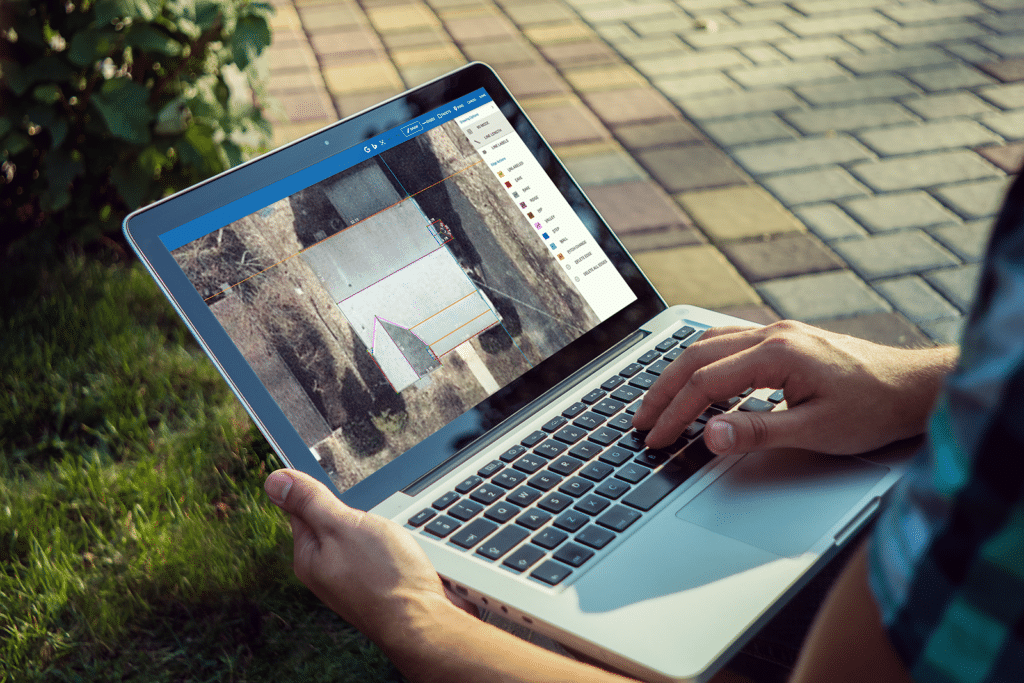
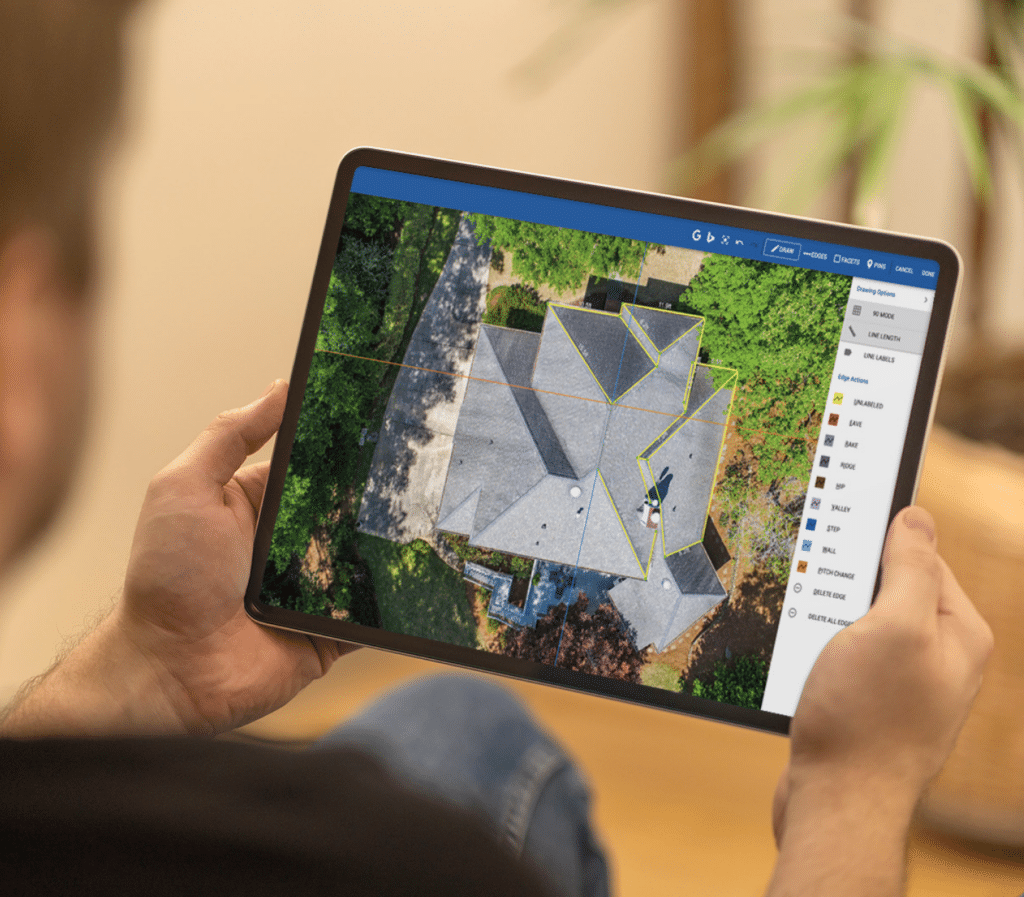
However, it can be difficult to keep track of so many costing factors. And that’s where RoofSnap comes in. RoofSnap is an all-in-one roofing software with powerful roof measurement and estimating tools designed to safeguard profits.
High Sales Close Rate
Volume matters in the roofing business. The more jobs you can score, the more you earn. Even when roofing jobs don’t pay much, sheer volume can make up for low revenue and narrow margin jobs.
Balanced Pricing Strategy
The final price is just as important as the pricing model. Roofers normally charge a flat fee, by the hour, for time and materials, or per square footage.
Really, any pricing model will do. The important thing is to charge for jobs in a way that’s convenient, simple, practical, competitive, and profitable.
Working Closely with Insurers
Insurers prefer working with diligent, transparent, and trustworthy contractors on insurance restoration jobs. Such roofers sometimes forge lucrative long-term relationships with insurers. They become the go-to contractors for high-volume roof inspection, restoration, and quality assurance work.
Minimizing Waste and Reworks
A big part of being efficient is minimizing waste. Accurate materials take-off ensures that expensive roofing materials do not end up in the bin. This maximizes profitability, especially when charging a flat rate.
Reworks will also eat away at your profits. So, ensure every job is done by the book and to the customer’s satisfaction.
Field Service Optimization
In addition to minimizing waste, optimizing field operations also boosts profits. Efficient scheduling, dispatch, fleet management, project planning, and resource allocation enhance productivity and cut costs.
Common Reasons Roofing Companies Lose Money
Even with steady revenue, roofing companies can still lose money. Contractors sometimes lose money to underpriced jobs, change orders, inefficient crews, and material price hikes. The good news is that most of these losses can be avoided.
Underestimating Roof Size or Complexity
Underestimating the size of a roof or a job’s complexity can be costly. Either case leads to underpricing the job. And that, of course, forces the contractor to make up the difference from their own pocket.
Poor Change Order and Supplement Handling
In some cases, especially when dealing with roof repairs and restorations, the job can quickly exceed the planned budget and schedule. Perhaps some of the damage was hidden and only became apparent mid-project.
Scope creep is actually quite common in roofing. But unfortunately, contractors lose money by handling the problem poorly. For instance, poorly written change orders and supplemental handling requests can be rejected.
Labor Overruns and Inefficient Crews
With each roofing technician racking up $22.35 an hour, any time wasted on site is money going down the drain. Labor overruns normally occur due to inefficient crews, poor work scheduling, and sloppy dispatching.
Material Waste and Price Hikes
Wasted materials erode roofing profit margins. Material losses usually stem from over-ordering, poor storage and handling, reworks, purchase errors, and wasteful workmanship.
Price fluctuations are not really in the contractor’s control. But there are ways to protect against them in a roofing contract and supplier agreements.
Weak Sales Process
Offering discounts and low prices is a great way to attract roofing clients. And it can also be a cash sink. When dealing with narrow, fragile margins, putting sales ahead of value is a costly mistake.
Don’t get it wrong—competitive pricing does work. But only when the close rate is high enough to make up for the sacrificed margins.
RELATED ARTICLE — How to Estimate Labor Cost for Roofing: A Contractor’s Field Guide
Startup Costs and Revenue Potential
Starting a roofing business in 2026 costs $30,000–$80,000. The roofing business startup cost will mainly depend on your starting point and the scale you have in mind. And depending on how quickly you hit the ground, you can start seeing some cash flow in just a few months.
Startup Cost Ranges
The $30,000–$80,000 startup cost is just an arbitrary range. Some sources quote much lower ranges at $15,000–$50,000. Others, like Wexford Insurance, suggest higher startup costs ($20,000 to $100,000). These are educated guesses meant to give you an idea of what it takes to start a roofing business.
Lean Startup vs. Fully Built-Out Company
A lean startup is a business methodology that prioritizes experimentation over detailed planning. It’s built on ideas that can easily be tested in the real world, mainly through customer reactions and responses.
You’re sort of winging it with the lean approach; throwing ideas and seeing what sticks.
In contrast, a fully built-out company is meticulously planned. It’s built on a solid business plan describing every aspect of the enterprise. This type of startup is strategic and consistent.
First-Year Revenue Expectations
Earlier, we saw that the annual revenue for small and mid-sized roofing companies ranges between $400,000 and $2 million. But you probably won’t be generating so much revenue in the first year. Realistically, roofing startups generate $150,000–$500,000 in revenue during their first year of business.
Keep in mind that revenue performance relies heavily on the roofing business model and marketing.
Timeline to Profitability
So, how soon until you actually start making money?
The beauty of the roofing business is that you can turn a profit on your very first job. As long as your overheads are low and the pricing is right, that first job should make you some money. It probably won’t be much, but it’s a good start.
In terms of timeline to profits, it’s however quickly you can start landing jobs.
Importance of Systems Early On
Start using roofing software as soon as the business launches. You need an accurate way of estimating jobs and calculating costs from the start. Going digital early on starts your roofing business on a path of efficiency and profitability.
RELATED ARTICLE — How to Eliminate Human Error with Automated Roofing Estimating Software
How to Make a Roofing Business More Profitable
Roofing contractors turn more profits by landing more jobs, optimizing workflows, and cutting costs. Earning more is about working smarter and making the best use of the available resources.
Here are practical tips for boosting profits in a roofing business:
- Improve estimating accuracy to avoid unexpected losses.
- Standardize pricing and margins to guarantee earnings in every job.
- Invest in sales training to close more deals.
- Track your KPIs closely (job cost, close rate, average ticket, etc.).
- Cultivate fruitful relationships with suppliers, insurers, realtors, and construction companies.
- Invest in lead generation strategies.
- Raise prices or change the pricing model whenever necessary.
- Use technology for measurement and reporting.
Protecting and growing profits basically comes down to getting the numbers right and working efficiently. That right there is why every roofer needs RoofSnap. RoofSnap removes the guesswork in roof measurement and estimation, helping you pursue the profits you deserve. Start your free RoofSnap trial today.
Is Roofing a Good Business to Start in 2026?
Yes, roofing is a promising and lucrative business. Roofing services are in constant demand, the pay is decent, and there are plenty of opportunities for differentiation, growth, and expansion. However, you have to really put in the work to make money in the roofing business.
The trick is figuring out what makes the business work. And usually, it’s a combination of the right business tools and strategies that separates profitable roofing businesses from struggling contractors.