Roof Square Footage Calculator
How to Use This Roof Square Footage Calculator
This roofing square footage calculator helps you estimate roof area for simple roof shapes using just a few inputs. It’s designed to give you a fast, directional number without needing complex measurements.
Whether you’re planning a project or learning how to calculate roof square footage, this calculator gives you a fast, reliable starting point.
For best results, make sure your measurements match how the structure will actually be framed.
You Will Need:
- Roof length (in feet)
- Roof width (in feet)
- Roof pitch (e.g., 6/12, 8/12)
Enter Measurements
Roof Square Footage Results
Need exact roof measurements?
Measure any roof instantly using aerial imagery and get precise square footage with RoofSnap.
How this Roof Square Footage Calculator Works
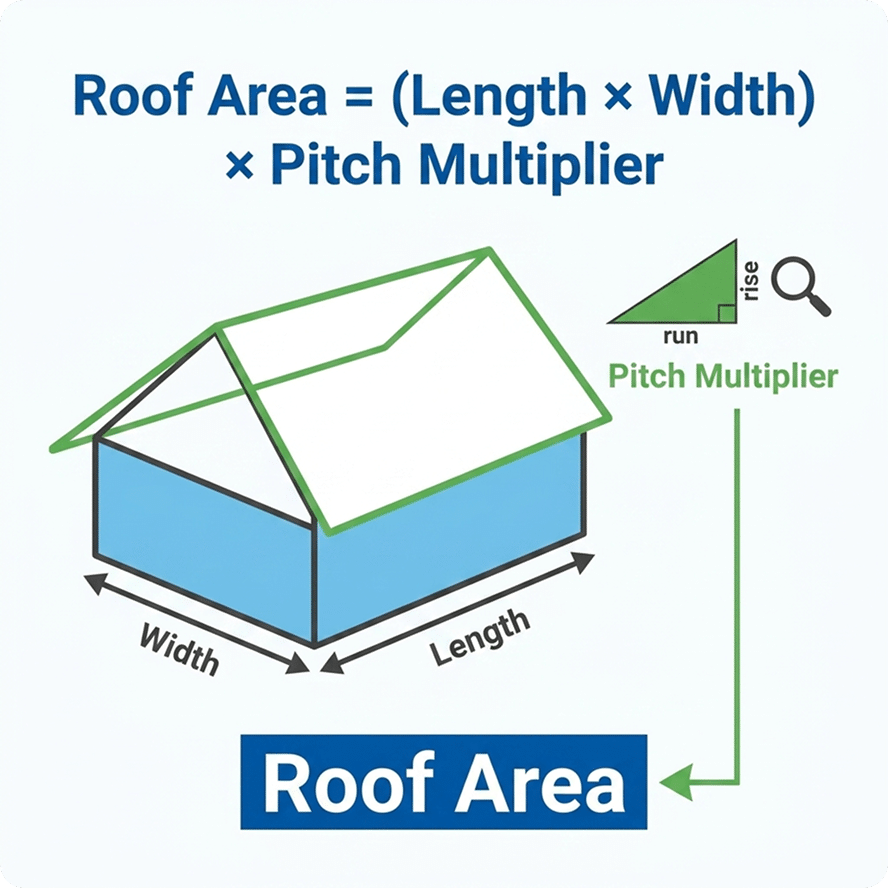
This roof calculator for square footage estimates roof area by starting with your building’s footprint (length × width) and adjusting for roof pitch.
Because pitched roofs have more surface area than flat ones, a pitch multiplier is applied based on the steepness of the roof.
Formula:
Roof Area = (Length × Width) × Pitch Multiplier
What that means:
- Flat footprint: Base square footage
- Pitch multiplier: Added surface area from slope
- Final result: True roof square footage
The steeper the pitch, the greater the total surface area:
- A low-slope roof (4/12) adds minimal extra area
- A steep roof (10/12 or higher) significantly increases total square footage
This method provides a fast estimate for straightforward roof shapes, especially gable roofs with two equal sides.
Roof Square Footage by House Size
Your roof is almost always larger than your home’s square footage because of pitch and design. The steeper the roof, the more surface area it has.
Here are general estimates for simple roof shapes:
- 1,000 sq ft home: ~1,050 to 1,200 sq ft roof
- 1,500 sq ft home: ~1,575 to 1,800 sq ft roof
- 2,000 sq ft home: ~2,100 to 2,400 sq ft roof
- 2,500 sq ft home: ~2,625 to 3,000 sq ft roof
These ranges account for typical roof pitches from low slope (4/12) to steeper roofs (8/12).
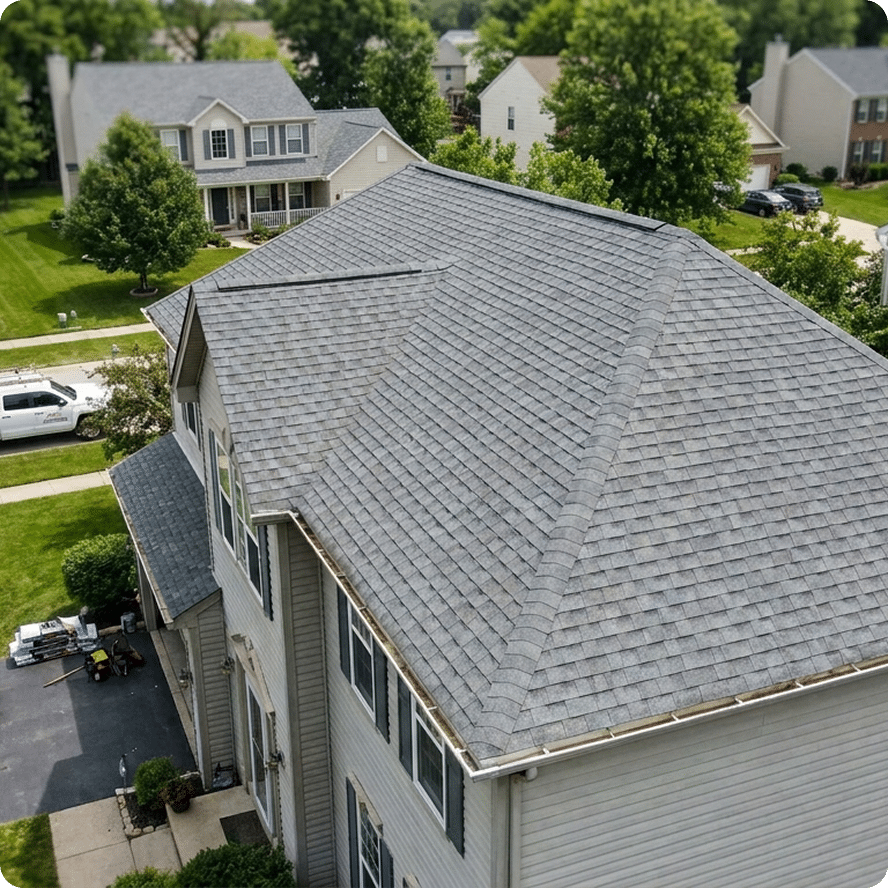
More complex roof designs such as hips, valleys, dormers, or multiple sections can significantly increase total square footage beyond these estimates.
For a more accurate result based on your exact dimensions, use the roof square footage calculator above.
When to Use a Roof Square Footage Calculator
A roof square footage calculator is useful when you need a quick estimate without detailed measurements.
Common use cases include:
- Early project planning
- Budgeting or ballpark estimates
- Comparing property sizes
- Preparing for inspections or proposals
This is the fastest way to calculate roof square footage without actually climbing on a roof.
Keep in mind:
This type of calculator works best for simple roof layouts.
Complex roofs will require more precise measurement tools.
For roofs with:
- Multiple sections
- Valleys or hips
- Dormers or extensions
A basic roofing square footage calculator will not provide accurate results.
Roof Square Footage Glossary
Roof Square Footage
The total surface area of a roof, measured in square feet, including all slopes and surfaces.
Gable Roof
A simple roof design with two sloping sides that meet at a ridge. This is the most common roof type used for basic square footage estimates.
Roof Pitch
The slope of a roof, expressed as a ratio of vertical rise to horizontal run (e.g., 6/12).
Hip Roof
A roof with slopes on all sides. Hip roofs typically have more surface area than gable roofs of the same footprint.
Roof Squares
A roofing measurement unit equal to 100 square feet of roof area; used for estimating materials and labor.
Roof Valley
The internal angle where two roof planes meet. Valleys increase total roof surface area and complexity.
Building Footprint
The flat area a building covers on the ground, calculated as length × width.
Roof Ridge
The highest horizontal line of a roof where two roof planes meet.
Pitch Multiplier
A factor used to convert a flat footprint into actual roof surface area based on slope.
Eaves
The edges of the roof that extend beyond the exterior walls. Overhangs can increase the total roof square footage.
Dormer
A structure that projects from a sloped roof, often containing a window. Dormers add complexity, additional roof planes, and surface area.
Overhang
The portion of roof expanding past the building walls. Larger overhangs add to total roof area.
Roof Plane
A single flat surface of a roof. Complex roofs have multiple planes.
Low-Slope Roof
A roof with a shallow pitch (typically under 4/12), resulting in less additional surface area.
Aerial Roof Measurement
A method of calculating roof dimensions using satellite or aerial imagery, often used for more accurate measurements.
Steep-Slope Roof
A roof with a higher pitch (typically 6/12 or greater), increasing total surface area.
Roof Measurement Report
A detailed breakdown of roof dimensions, including area, pitch, and features—typically generated by professional tools or software.
Roof Square Footage Calculator FAQs
Multiply your building’s length by width to get the footprint, then apply a pitch multiplier. This converts flat area into true roof surface area.
Measure the length and width of your building, multiply to get square footage, then adjust for pitch using a multiplier. This is the standard method used to calculate roof square footage.
Multiply the length and width of your home to get footprint area, then adjust for pitch using a slope factor. This converts flat area into true roof surface area.
A roofing square equals 100 square feet of roof surface area. Most shingles are sold in bundles, with about 3 bundles per square.
It provides a reliable estimate for simple roofs, but complex roof shapes can significantly affect accuracy.
This calculator assumes a single, simple shape. Multiple sections will require more detailed measurement.
You’ll need to measure each section separately and combine totals or use a professional measurement tool.
Yes. Steeper roofs have more surface area, which increases total square footage and material needs.
It works best for gable-style roofs. Hip roofs and complex designs and layouts will require more advanced calculations.
Because slope adds surface area beyond the flat footprint of the building.
A pitch multiplier adjusts flat square footage to reflect the actual roof area based on slope.
Contractors use measurements, pitch multipliers, and even aerial tools like satellite or drone photos to quickly calculate accurate roof square footage.
Yes. Tools like RoofSnap use aerial imagery to generate precise measurements for any roof shape.